Buy croisière.be ?
We are moving the project
croisière.be .
Are you interested in purchasing the domain
croisière.be ?
domain@kv-gmbh.de · 0541-91531010
Buy croisière.be ?
What is the correct conjugation?
The correct conjugation of a verb depends on the subject of the sentence and the tense being used. In English, regular verbs typically follow a pattern of adding -ed to form the past tense (e.g., walk becomes walked). Irregular verbs, on the other hand, have unique conjugations that do not follow a set pattern (e.g., go becomes went). It is important to pay attention to the subject of the sentence and the tense being used in order to correctly conjugate a verb. **
What conjugation does "dare" have?
"Dare" is a regular verb in Italian and belongs to the second conjugation. In the present tense, it is conjugated as follows: io do, tu dai, lui/lei dà, noi diamo, voi date, loro danno. **


Similar search terms for Conjugation
Top-Angebote
Products related to Conjugation:
-
Sigma Beauty Travel Kit kit voyageSigma Beauty Travel Kit, 7 pcs, Sets de pinceaux pour femme, Les maquilleurs professionnels n’utilisent que des pinceaux de qualité. Inspirez-vous donc de leur expertise et remplacez vos doigts par des pinceaux. Le kit de pinceaux de maquillage Sigma Beauty Travel Kit élèvera votre mise en beauté à un niveau supérieur et vous permettra de réaliser votre make-up de jour ou de soirée aussi bien qu’un professionnel. Avec ce kit, aucun look ne sera hors de votre portée, que vous vous maquilliez à la maison ou n’importe où ailleurs. L'ensemble contient: Face F30 Large Powder Brush grand pinceau poudre compacte ou libre 1 pcs Eyes E55 Eye Shading Brush pinceau estompeur et transitions 1 pcs Eyes E30 Pencil Brush pinceau eyeliner 1 pcs Face E40 Tapered Blending Brush pinceau estompeur 1 pcs Eyes E65 Small Angle Brush pinceau multifonctionnel 1 pcs Face F60 Foundation Brush pinceau fond de teint liquide 1 pcs boîte de rangement pour pinceaux 1 pcs Le produit : pour l’application de produit en crème pour l’application de produit en poudre forme spéciale pour une application facile idéal pour la valise ou pour votre sac à main92,16 €*Shipping: 3,45 €Secure redirect to the provider


-
What is conjugation in German?
Conjugation in German refers to the process of changing the form of a verb to match the subject of the sentence. This means that the verb will have different endings depending on whether the subject is "I," "you," "he/she/it," "we," or "they." Conjugation is an important aspect of German grammar as it helps to indicate who is performing the action in a sentence. It is essential for learners of German to understand how to conjugate verbs in order to communicate effectively in the language. **
-
How do I distinguish between the verbs of the E-conjugation and the consonant conjugation?
In Old Norse, the E-conjugation verbs typically end in -a in the infinitive form, while the consonant conjugation verbs end in -a, -i, or -u. Additionally, the E-conjugation verbs have a stem vowel that changes between the present and past tense, while the consonant conjugation verbs have a stem vowel that remains the same. It is also important to note that there are irregular verbs in both conjugations that do not follow these patterns. Therefore, it is important to study and memorize the specific conjugation patterns for each verb. **
-
What is the conjugation in German?
Conjugation in German refers to changing the form of a verb to match the subject of a sentence. This means adjusting the verb's ending based on the person (I, you, he/she/it, we, you all, they) and tense (present, past, future). German verbs can have different conjugations depending on these factors, making it important to learn the various verb forms to communicate accurately in the language. **
-
What does the consonantal conjugation mean?
Consonantal conjugation is a grammatical feature found in Semitic languages, where the root of a verb consists of consonants only, and the vowels are added to indicate different tenses, moods, and aspects. This type of conjugation is characterized by changes in the vowels within the root consonants to convey different meanings. Consonantal conjugation allows for a high degree of flexibility and complexity in verb forms, making it a key feature of Semitic language grammar. **
Is there a language without conjugation?
Yes, there are languages without conjugation. For example, Chinese is a language that does not have verb conjugation. In Chinese, verbs remain the same regardless of the subject or tense. Instead, time expressions or context are used to indicate when an action took place. **
What is the conjugation for French adjectives?
In French, adjectives must agree in gender (masculine/feminine) and number (singular/plural) with the noun they describe. To conjugate an adjective, you add an -e for feminine and an -s for plural. For example, the adjective "petit" (small) would become "petite" in its feminine form and "petits" in its plural form. **
Top-Angebote
Products related to Conjugation:
-
MEDIBLANC Travel Set kit voyageMEDIBLANC Travel Set, , Dentifrices blanchissants pour homme, L'ensemble contient: MEDIBLANC Whitening dentifrice effet blancheur 50 ml MEDIBLANC Dental Floss fil dentaire 50 m MEDIBLANC 5490 Ultra Soft brosse à dents ultra soft 1 pcs17,00 €*Shipping: 3,45 €Secure redirect to the provider
-
NIVEA Travel Set kit voyageNIVEA Travel Set, , Antitranspirants pour femme, Retrouvez tous les soins nécessaires à l’obtention d’une belle peau dans un seul et unique kit. Le coffret cosmétique NIVEA Travel Set est idéal pour vous faire plaisir ou faire plaisir à vos proches. L'ensemble contient: NIVEA Micellar Soothing eau micellaire nettoyante peaux sensibles 100 ml NIVEA Invisible Black & White Clear anti-transpirant en spray 100 ml NIVEA Creme Soft gel douche traitant 50 ml NIVEA Volume Care laque cheveux 75 ml Le produit : assortiment de produits cosmétiques pour un usage quotidien contient les versions miniature des produits idéal pour les déplacements un ensemble de soins complet pour votre routine quotidienne fera plaisir à toutes les femmes Mode d’emploi : Utilisez chaque produit contenu dans le coffret cosmétique en respectant les instructions fournies dans le mode d’emploi.12,33 €*Shipping: 3,45 €Secure redirect to the provider
-
Sigma Beauty Travel Kit kit voyageSigma Beauty Travel Kit, 7 pcs, Sets de pinceaux pour femme, Les maquilleurs professionnels n’utilisent que des pinceaux de qualité. Inspirez-vous donc de leur expertise et remplacez vos doigts par des pinceaux. Le kit de pinceaux de maquillage Sigma Beauty Travel Kit élèvera votre mise en beauté à un niveau supérieur et vous permettra de réaliser votre make-up de jour ou de soirée aussi bien qu’un professionnel. Avec ce kit, aucun look ne sera hors de votre portée, que vous vous maquilliez à la maison ou n’importe où ailleurs. L'ensemble contient: Face F30 Large Powder Brush grand pinceau poudre compacte ou libre 1 pcs Eyes E55 Eye Shading Brush pinceau estompeur et transitions 1 pcs Eyes E30 Pencil Brush pinceau eyeliner 1 pcs Face E40 Tapered Blending Brush pinceau estompeur 1 pcs Eyes E65 Small Angle Brush pinceau multifonctionnel 1 pcs Face F60 Foundation Brush pinceau fond de teint liquide 1 pcs boîte de rangement pour pinceaux 1 pcs Le produit : pour l’application de produit en crème pour l’application de produit en poudre forme spéciale pour une application facile idéal pour la valise ou pour votre sac à main92,16 €*Shipping: 3,45 €Secure redirect to the provider
-
What is the correct conjugation?
The correct conjugation of a verb depends on the subject of the sentence and the tense being used. In English, regular verbs typically follow a pattern of adding -ed to form the past tense (e.g., walk becomes walked). Irregular verbs, on the other hand, have unique conjugations that do not follow a set pattern (e.g., go becomes went). It is important to pay attention to the subject of the sentence and the tense being used in order to correctly conjugate a verb. **
-
What conjugation does "dare" have?
"Dare" is a regular verb in Italian and belongs to the second conjugation. In the present tense, it is conjugated as follows: io do, tu dai, lui/lei dà, noi diamo, voi date, loro danno. **
-
What is conjugation in German?
Conjugation in German refers to the process of changing the form of a verb to match the subject of the sentence. This means that the verb will have different endings depending on whether the subject is "I," "you," "he/she/it," "we," or "they." Conjugation is an important aspect of German grammar as it helps to indicate who is performing the action in a sentence. It is essential for learners of German to understand how to conjugate verbs in order to communicate effectively in the language. **
-
How do I distinguish between the verbs of the E-conjugation and the consonant conjugation?
In Old Norse, the E-conjugation verbs typically end in -a in the infinitive form, while the consonant conjugation verbs end in -a, -i, or -u. Additionally, the E-conjugation verbs have a stem vowel that changes between the present and past tense, while the consonant conjugation verbs have a stem vowel that remains the same. It is also important to note that there are irregular verbs in both conjugations that do not follow these patterns. Therefore, it is important to study and memorize the specific conjugation patterns for each verb. **
Similar search terms for Conjugation
-
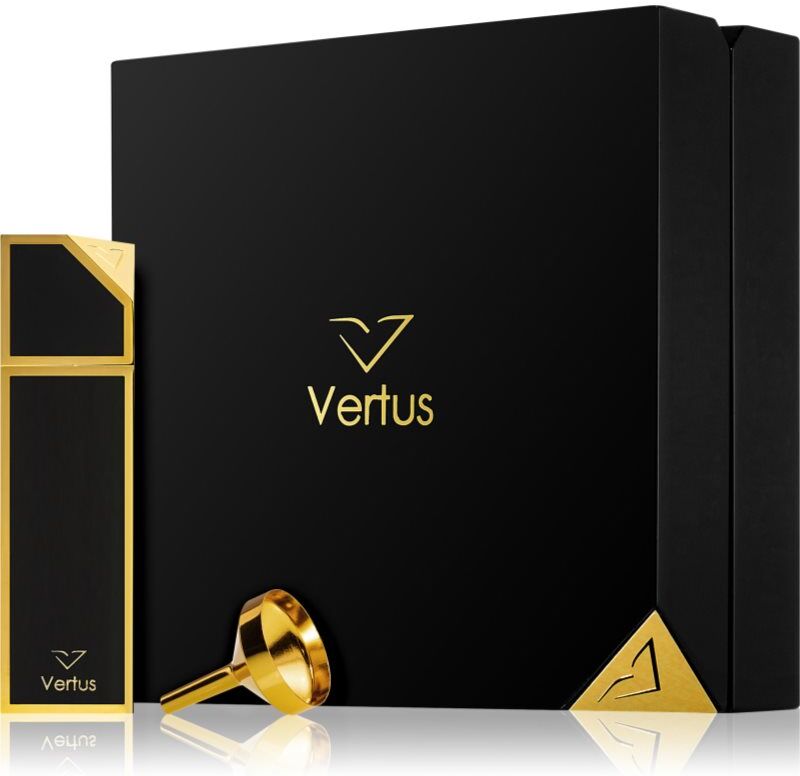
Vertus Luxury Travel set kit voyage mixteVertus Luxury Travel set, 10 ml, Coffret unisexe mixte, Rien ne plaira plus aux amatrices de parfum que la miniature de leur parfum préféré, qu'elles pourront emporter partout. Le coffret de parfum mixte Vertus Luxury Travel set plaira à coup sûr, pour vous ou à offrir. Le grand flacon restera sur la tablette de toilette, alors que la version miniature vous accompagnera dans tous vos déplacements. Le produit : mixte : tant pour les femmes que pour les hommes parfum original pour les personnalités uniques L'ensemble contient: Vertus Narcos'is Eau de Parfum 10 ml Travalo 10 ml Funnel83,50 €*Shipping: 3,45 €Secure redirect to the provider
-
What is the conjugation in German?
Conjugation in German refers to changing the form of a verb to match the subject of a sentence. This means adjusting the verb's ending based on the person (I, you, he/she/it, we, you all, they) and tense (present, past, future). German verbs can have different conjugations depending on these factors, making it important to learn the various verb forms to communicate accurately in the language. **
-
What does the consonantal conjugation mean?
Consonantal conjugation is a grammatical feature found in Semitic languages, where the root of a verb consists of consonants only, and the vowels are added to indicate different tenses, moods, and aspects. This type of conjugation is characterized by changes in the vowels within the root consonants to convey different meanings. Consonantal conjugation allows for a high degree of flexibility and complexity in verb forms, making it a key feature of Semitic language grammar. **
-
Is there a language without conjugation?
Yes, there are languages without conjugation. For example, Chinese is a language that does not have verb conjugation. In Chinese, verbs remain the same regardless of the subject or tense. Instead, time expressions or context are used to indicate when an action took place. **
-
What is the conjugation for French adjectives?
In French, adjectives must agree in gender (masculine/feminine) and number (singular/plural) with the noun they describe. To conjugate an adjective, you add an -e for feminine and an -s for plural. For example, the adjective "petit" (small) would become "petite" in its feminine form and "petits" in its plural form. **
* All prices are inclusive of VAT and, if applicable, plus shipping costs. The offer information is based on the details provided by the respective shop and is updated through automated processes. Real-time updates do not occur, so deviations can occur in individual cases. ** Note: Parts of this content were created by AI.